You did everything right. You had the surgery, you followed the advice, and you hoped that chapter was behind you. So when the old feelings return- that tightness in the chest, the shortness of breath, the worry- it can be deeply frightening.
Please take a breath, because you are not back at square one, and you are not alone in this. Returning symptoms are more common than many people realize, and there are gentle, non-invasive ways to help your heart feel strong again. At CoCardio®, we are here to help you understand what is happening and give you a clear, caring plan forward.
Why do symptoms sometimes return after bypass surgery?
Bypass surgery is a powerful step, but it does not change the factors that affected your heart in the first place. Over time, those same factors can narrow your vessels again, including the grafts created during surgery.
Here is what is helpful to understand:
- This is not your fault: Vessels can narrow again over the years, even when you have done your best.
- It does not mean the surgery failed: It means your heart still needs ongoing support and care.
- It is a signal, not a dead end: Returning symptoms are your body asking for attention, and that is something you can act on.
Understanding the why can take some of the fear out of the moment. Your heart is communicating with you, and there is a great deal that can be done to help.
What should you do when symptoms come back?
The most important thing is not to ignore them. Any recurrence of chest pain warrants medical attention, so reach out to your doctor or Therapist promptly to have your symptoms evaluated.
One calm but important note: if your chest pain is severe, comes on suddenly, or is joined by shortness of breath, sweating, or pain spreading to your arm or jaw, treat it as an emergency and seek help right away. It is always better to be safe.
Once you are evaluated and your Therapist understands what is happening, you can explore the right next steps together. For many people, that includes gentle, non-invasive options that support the heart without another operation.
How can ECP/EECP® help after bypass surgery?
ECP/EECP® therapy can be a reassuring option for people whose symptoms have returned after bypass surgery, especially those who would rather not face another procedure right away.
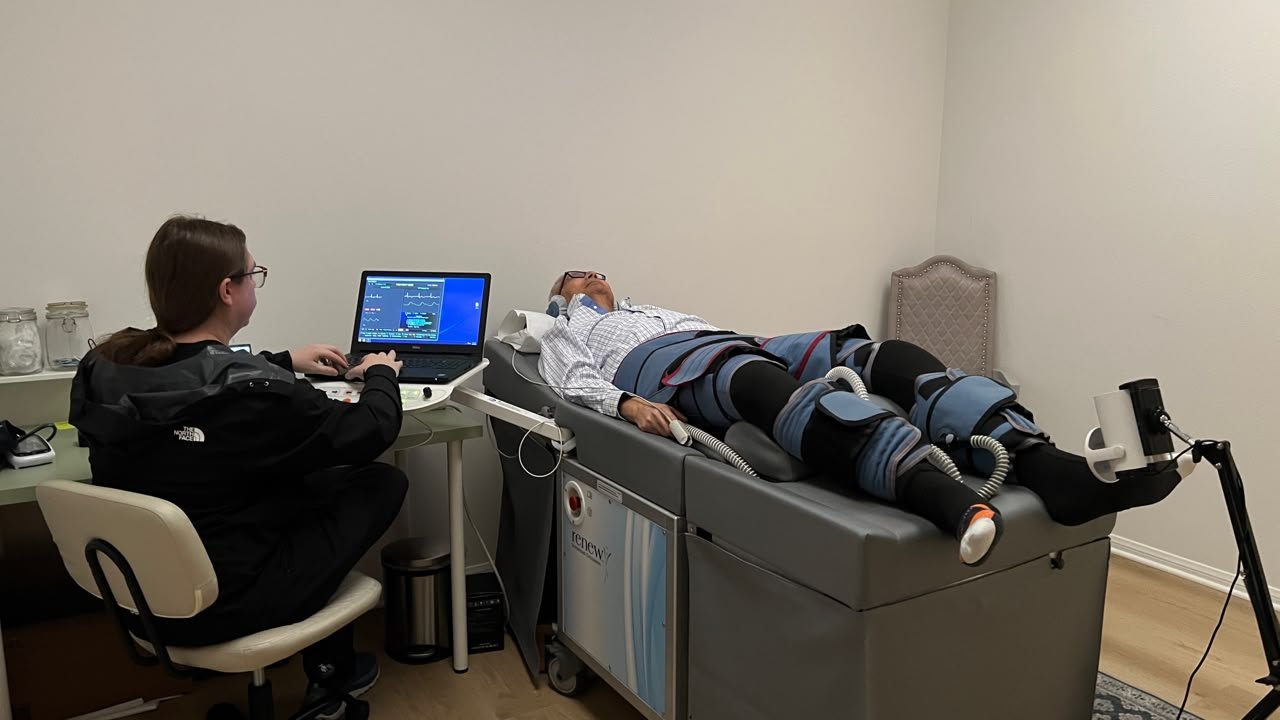
ECP stands for External Counterpulsation, and ECP/EECP® stands for Enhanced External Counterpulsation. It is non-invasive, which means nothing goes inside your body. There is no surgery and no cuts. During treatment, soft cuffs gently squeeze and release in rhythm with your heartbeat, encouraging more blood to flow toward your heart.
For a heart that has already undergone surgery, this gentle, steady support can be a welcome way to strengthen circulation and ease symptoms without adding further strain.
What are the benefits for post-bypass patients?
Over a full course, the benefits build gradually, and many are both felt and measurable. People recovering from bypass often notice:
- Less chest pain: Returning angina can ease over the course of therapy.
- Improved circulation: ECP/EECP® supports new, tiny vessels around narrow areas, which doctors call collateral vessels.
- Healthier vessel function: It supports the lining of your vessels so they open and relax the way they should.
- More energy: As blood flow improves, everyday activities can feel more manageable again.
- A calmer, steadier feeling: Gentle support helps ease a heart under strain, which many feel as better sleep and less fear.
Together, these changes can help you feel more like yourself, with more freedom and less worry.
Real Patient Stories: Life After Bypass Surgery with ECP/EECP®
Bypass surgery can restore blood flow to the heart and relieve symptoms, but it does not eliminate the underlying coronary artery disease. Over time, some patients may experience recurring chest pain, shortness of breath, fatigue, or reduced exercise tolerance.
Dan’s journey reflects what life after bypass surgery can sometimes look like. Sixteen years after undergoing quadruple bypass surgery, he had experienced seven strokes and eventually began experiencing chronic angina when climbing stairs or walking only a few blocks. When he was told he would likely need another bypass surgery, he began searching for other treatment options and explored ECP/EECP® as part of a comprehensive heart-care program.

After approximately six weeks of treatment, Dan reported that he could walk about 1.5 miles with little or no chest discomfort. He also described reduced angina, improved exercise tolerance, and greater confidence in his ability to remain active. His program included ECP/EECP®, nutrition guidance, yoga, and other supportive therapies addressing his overall health.
Dan’s story demonstrates that recurring symptoms after bypass surgery do not always mean another invasive procedure is the only possible path. For appropriately selected patients, ECP/EECP® may provide additional symptom relief and help improve daily function and quality of life.
Watch Dan’s full story: How he avoided a second bypass surgery
Is ECP/EECP® safe after bypass surgery?
For many post-bypass patients, ECP/EECP® is a safe and gentle option, and because it is non-invasive, there is no wound to heal and no recovery time. Every session is carried out by a trained Therapist who monitors you throughout.
That said, ECP/EECP® is not right for everyone, which is exactly why a thorough consultation comes first. The therapist reviews your full health history, including your surgery, to confirm the therapy is a good and safe match for you before you begin. This careful, precision-designed screening is part of what makes the experience so reassuring.
How does CoCardio® support you after bypass surgery?
If the hospital phase left you feeling a little alone, this is where CoCardio® is different. Our whole approach is built to keep you supported, and it follows a simple 3-Step Method.
Detect Early means we look closely at your heart and understand exactly what is happening now, using precise tests that give you real clarity.
Protect Fully means we build a personalized, evidence-based plan that may include ECP/EECP®, better nutrition, safe movement, and stress support, matched to your history and your goals.
Connect Deeply means you are never left to figure this out by yourself, because our team stays beside you with coaching, reassurance, and steady care every step of the way.
This is heart care that treats you as a whole person, not just a chart, so you always feel seen, supported, and understood.
Take the next step for your heart
Returning symptoms do not have to mean fear and uncertainty. With the right plan and consistent support, your heart can grow stronger again, and you can feel steady and confident about the road ahead. Our goal is lasting resilience, not temporary relief.
If your symptoms have come back after bypass surgery, you do not have to face it alone, and you do not have to jump straight to another operation. Book a consultation with the CoCardio® team today, and together we can create a caring, non-invasive plan that helps you feel safe, supported, and in control of your heart health.
Frequently Asked Questions About ECP/EECP® After Bypass Surgery
Why are my symptoms coming back after bypass surgery?
Bypass surgery treats the affected vessels, but it does not stop the underlying process, so vessels and grafts can narrow again over time. It is common, it is not your fault, and it is something your Therapist can help you address.
What should I do if chest pain returns after bypass?
Contact your doctor or Therapist promptly to be evaluated. If the pain is severe or sudden, or comes with shortness of breath, sweating, or pain spreading to your arm or jaw, seek emergency help right away.
Can I have ECP/EECP® therapy after bypass surgery?
For many post-bypass patients, yes. ECP/EECP® is a non-invasive option that can help ease returning angina and support circulation, and a consultation confirms whether it is a safe fit for you.
Is ECP/EECP® safe for people who have had heart surgery?
For many people, it is a safe, gentle option, since it is non-invasive with no recovery time. Your Therapist reviews your full history to make sure it is right for you before you begin.
Will ECP/EECP® mean I avoid another surgery?
Everyone is different. ECP/EECP® can help many people manage returning symptoms without another procedure, but your Therapist will guide the best path based on your heart and your history.
Do I keep taking my medication during ECP/EECP®?
Yes, never stop on your own. ECP/EECP® works alongside your doctor’s plan, so keep taking what you are prescribed and let your Therapist guide any changes.
Medical Disclaimer
This article is for educational purposes only. It does not provide medical advice, diagnosis, or treatment. ECP/EECP® Therapy may not be right for everyone. Speak with a qualified health care professional about chest pain, heart disease, and treatment options that may fit your needs. Seek urgent medical care for new, severe, or worsening chest pain, severe shortness of breath, fainting, or symptoms that may signal a medical emergency. EECP® is a registered trademark of Vasomedical Inc, NY.