
The Prescription Is Not the Plan
The prescription is not the plan. It is one part of it.
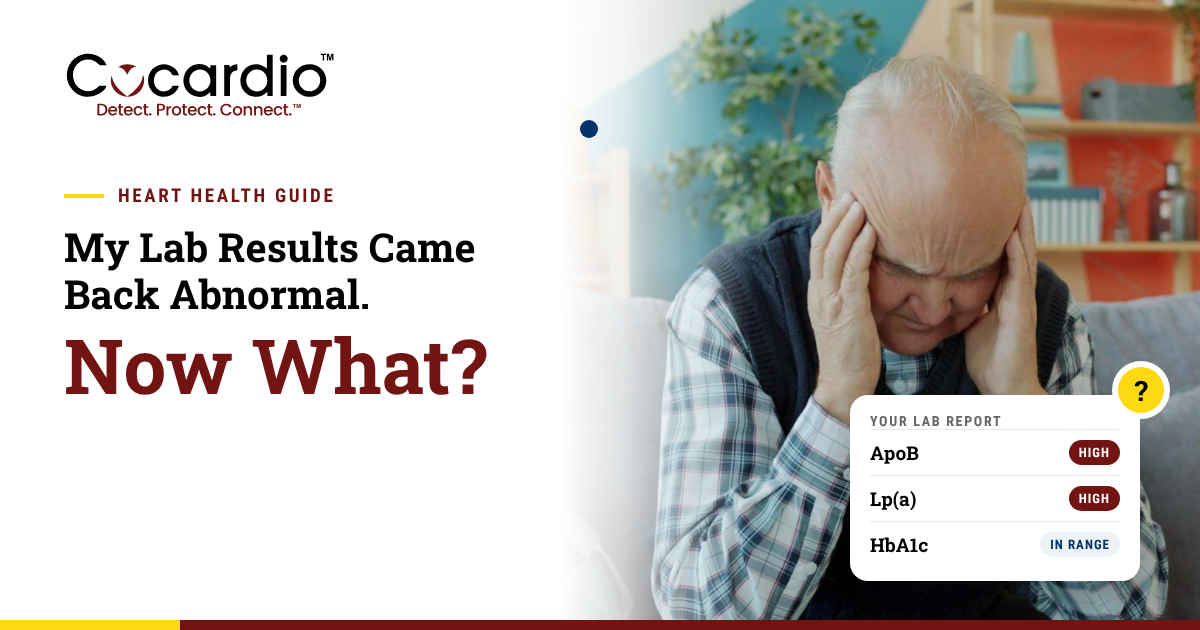
Maybe you are sitting in the car after your appointment. You have a new prescription and a five-minute explanation, and you’re wondering whether that was the whole plan.
Nothing here is a reason to change what your doctor prescribed. This article answers a different question, one many people leave the office with:
Besides taking medication, what else can I do to reduce my cardiovascular risk?
It does not have to be medication versus lifestyle. Comprehensive prevention uses every appropriate tool to reduce risk.
Important: This article is for educational purposes only and cannot advise on your medication. New, worsening, or persistent chest discomfort needs prompt medical attention. Call 911 if you think you may be having an emergency.
What a Statin Does, and What It Leaves to You
What a statin actually does. A statin lowers LDL cholesterol, and lowering LDL reduces the risk of heart attack and stroke. Decades of large clinical trials support that benefit. It is real, and nothing in this article disputes it.
What it does not do. A statin is not designed to treat your blood pressure, blood sugar, fat around your organs, fitness, sleep, or stress. Each of those affects your heart, and each one is still yours to work on, whatever is in the pill bottle.
Why “what else” is the right question. Cholesterol is one of many inputs to heart risk. The 2026 ACC/AHA Multisociety Guideline on the Management of Dyslipidemia moved toward earlier screening and earlier treatment. Dr Roger Blumenthal, who chaired the guideline committee, said that 80 percent or more of cardiovascular disease is preventable.
Prevention adds up. It does not have to be medication versus lifestyle. Comprehensive prevention uses every appropriate tool to reduce risk. Medication may be one part of the strategy. Lifestyle and metabolic optimization remain important regardless.
What Your Results May Be Telling You
A statin is usually recommended because of what your blood work and overall risk show. Here are the markers behind that conversation.
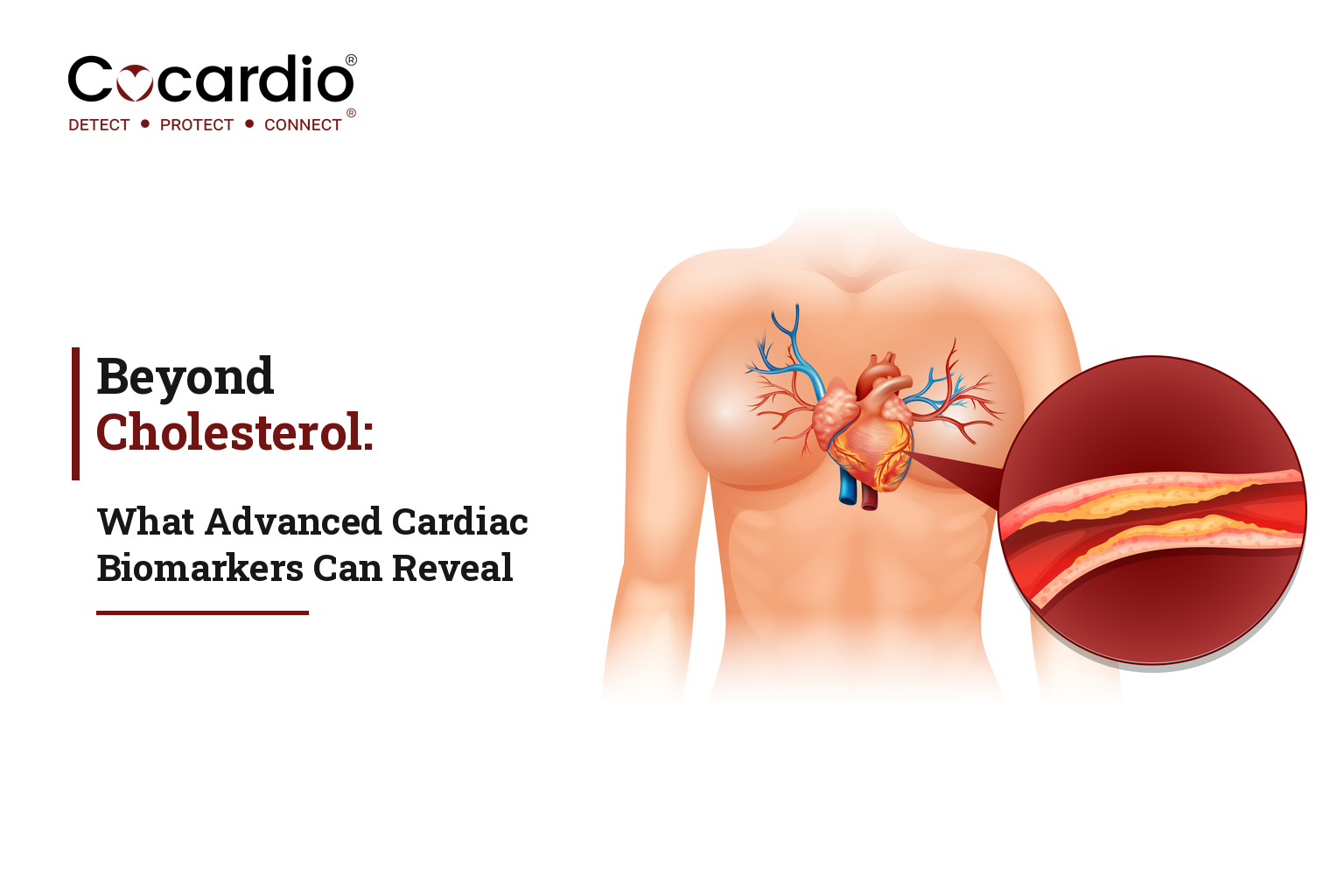
LDL cholesterol. This is usually the number that starts the discussion. It matters, and it is one of the most studied numbers in medicine. But it is not the only particle that causes trouble.
Non-HDL cholesterol. This is your total cholesterol minus HDL. It captures LDL plus VLDL plus IDL, all the particles that can lodge in an artery wall. It is usually calculated from your standard lipid panel, so it needs no extra test.
ApoB and Lp(a)
ApoB. ApoB counts the particles themselves, not the cholesterol inside them. It usually moves with LDL and non-HDL. When they disagree, risk tends to track with ApoB. The 2026 guideline supports ApoB testing especially when triglycerides are above 200 mg/dL, in diabetes, or when LDL is already below 70 mg/dL. If you want to lower ApoB naturally, nutrition, weight, and metabolic health all influence it. How far that gets you varies from person to person.
Lp(a). Lp(a) is largely inherited and barely moves with diet or exercise. It can be part of the reason heart disease runs in a family. The 2026 guideline recommends measuring it at least once in every adult. A high Lp(a) does not mean lifestyle stops mattering. It usually means everything else needs managing more determinedly.
Why your number led to a prescription. The 2026 guideline brought back LDL goals by risk level. For primary prevention, the goal is under 100 mg/dL at borderline or intermediate risk and under 70 mg/dL at high risk. For people who already have heart disease and are at very high risk, it is under 55 mg/dL. Which goal applies to you is your physician’s judgment.
These markers help us identify where we may be able to reduce risk.
What a Statin Recommendation Does Not Necessarily Mean
- It does not mean your lifestyle no longer matters. It matters as much as it did before the prescription.
- It does not mean you have failed. Genetics, age, and many other factors shape cholesterol. A prescription is not a grade.
- It does not mean you will be on medication forever, or that you won’t. That depends on your risk and how it changes, and it is a conversation for you and your prescriber over time.
- It does not mean the conversation is over. It means one part of it has been handled.
- It does not mean lifestyle can replace it. Whether lifestyle can do enough and whether medication is still needed are different questions with different answers for different people.
The goal is to understand your complete cardiovascular picture.
Questions to Discuss With Your Physician
- What LDL goal are we aiming for, and why that one for me?
- Would ApoB or Lp(a) add anything to what we already know?
- Would a calcium score change your recommendation?
- What would you expect to see at my next set of labs?
- If I make significant lifestyle changes, how and when would we reassess?
- Are any of my other risk factors doing more damage than my cholesterol?
Evidence-Based Lifestyle Actions
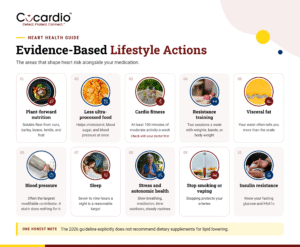
This is where the “what else” lives. These are the areas that shape heart risk alongside your medication, and together they make up lifestyle for high cholesterol in its fullest sense.
Whole-food, plant-forward nutrition
Build meals around vegetables, fruit, beans, lentils, whole grains, nuts, and seeds. Saturated fat matters more than dietary cholesterol for most people. Soluble fiber is among the most effective dietary tools for lowering cholesterol, and it comes only from plants, such as oats, barley, beans, lentils, and many fruits.
Reducing ultra-processed food
This is its own point, separate from what to add. Packaged snacks, processed meats, sugary drinks, and ready meals tend to bring saturated fat, refined carbohydrates, salt, and added sugar together. Cutting back helps cholesterol, blood sugar, and blood pressure at the same time.
Exercise and cardiovascular fitness
Brisk walking, cycling, or swimming does more than burn calories. It improves blood pressure, insulin sensitivity, triglycerides, and how well your heart and blood vessels respond to effort. Aim for at least 150 minutes of moderate activity a week, and check with your doctor before starting a new routine.
Resistance training
Strength training is frequently left out of heart advice entirely. Muscle is where your body stores and uses much of its blood sugar, so building it supports insulin sensitivity and metabolic health. Two sessions a week with weights, bands, or body weight is a good starting point.
Visceral fat and metabolic health
Fat stored deep around the organs is linked to insulin resistance, inflammation, and higher triglycerides. That is why your waist measurement often tells you more than the scale. Even a modest reduction in waist size may improve several markers at once.
Blood pressure optimization
Blood pressure is one of the largest modifiable contributors to risk. A statin is not a blood pressure treatment. Home readings, less salt, more potassium-rich foods, regular activity, limited alcohol, and good sleep all help, alongside any medication your physician recommends.
Sleep
Sleep is under-discussed in cardiac care and genuinely consequential. Short or broken sleep raises blood pressure, worsens blood sugar control, and increases appetite. Seven to nine hours a night is a reasonable target. Loud snoring or pauses in breathing are worth raising with your doctor.
Stress and autonomic health
Your autonomic nervous system controls heart rate and blood pressure without you thinking about it. Ongoing stress keeps it tilted toward “fight or flight.” Slow breathing, meditation, time outdoors, and steady routines can help shift it back toward rest and recovery. Our article on the autonomic nervous system goes deeper.
Smoking cessation when relevant
If you smoke or vape, stopping protects your arteries. Your doctor can help you find support that works for you.
Diabetes and insulin resistance
Insulin resistance sits upstream of much of the rest. It is linked to higher triglycerides and ApoB, lower HDL, and faster plaque build-up. Knowing your fasting glucose and HbA1c, and acting early if they are rising, protects your heart as much as your blood sugar.
One honest note: the 2026 guideline finds no proven role for dietary supplements in lowering cholesterol or triglycerides.
When Further Cardiovascular Assessment May Be Appropriate
CAC/CCTA when clinically appropriate
Coronary artery calcium scoring. The 2026 guideline broadened the use of calcium scoring to refine risk, pointing to men 40 and older and women 45 and older at borderline or intermediate risk. For some people, a score of zero means statin treatment may reasonably be deferred and the decision revisited later. A zero score does not rule out all plaque, and people with diabetes, who smoke, who have high Lp(a), or who have a strong family history may still benefit from treatment. A score above zero shifts the conversation toward earlier and more active prevention. This is where calcium score and statins meet. A zero score is information for your physician, not a reason to stop anything.
Coronary CT angiography (CCTA). This scan shows the arteries themselves, not only calcium. The 2021 AHA/ACC chest pain guideline gives it a Class 1, Level A recommendation for selected patients with chest pain. It uses contrast dye and radiation, so it is not a routine screening test for people without symptoms.
FFR-CT. This analysis of a CCTA scan estimates whether a narrowing actually restricts blood flow. The same guideline gives it a Class 2a recommendation for patients with chest pain whose CCTA shows a narrowing between 40 and 90 percent.
Re-measuring your lipids. Guidelines recommend a cholesterol panel, fasting or not, 4 to 12 weeks after starting or adjusting therapy, then every 3 to 12 months as needed. This is how you and your physician find out whether what you are doing is working.
How CoCardio® Helps You Build the Rest of the Plan
Detect Early. Protect Fully. Connect Deeply.
When medications may still be important
Some situations often call for medication as a central part of care, not one option among several. These include existing heart disease or a prior heart attack or stroke, familial hypercholesterolemia, high Lp(a) alongside other risk factors, and cases where lifestyle changes alone have not reached the goal you and your physician agreed on. Your physician decides what applies to you.
The gap CoCardio® fills
A short appointment does not leave room to build a full prevention plan. That is the cardiovascular prevention work we do at CoCardio® in Encinitas, alongside your prescribing clinician and never in place of them. Many people look for preventive cardiology care at this point. At CoCardio®, Dr Pratiksha G Gandhi MD, Preventive Heartcare Expert, looks at everything that affects your risk, from your labs to your sleep. It does not have to be medication versus lifestyle. Comprehensive prevention uses every appropriate tool to reduce risk.
CoCardio® never advises starting, stopping, reducing, or changing prescribed medication. That decision belongs with your prescriber.
Bring your results and your current care to CoCardio® for a preventive cardiovascular review and a personalized plan built around everything that affects your risk. Please share results only through our secure booking and intake process, never by email, social media, or public comments.
Frequently Asked Questions
These are questions we often hear from people working out what to do besides statins.
Should I stop my statin and try lifestyle first?
Don’t stop or change it on your own. Talk with your prescriber first. They can tell you whether lifestyle changes might change the plan over time.
Can lifestyle changes replace cholesterol medication?
It depends entirely on your situation, and it is not a question an article can answer. Effective high cholesterol treatment looks different for each person. For some people, lifestyle reaches the goal. For others, particularly people who already have heart disease or have familial hypercholesterolemia, it does not.
Does a zero calcium score mean I do not need a statin?
Not on its own. For some people, a zero score means treatment may be deferred, but it depends on your other risk factors. A zero score is meaningful information for your physician, who weighs it alongside everything else.
Can I lower ApoB without medication?
It depends. Nutrition, weight, and metabolic health all influence ApoB. How far those changes get you varies from person to person.
Do supplements lower cholesterol?
The 2026 guideline finds no proven role for dietary supplements in lowering cholesterol or triglycerides.
Is CoCardio® anti-medication?
No. Medication is one tool. Our work is everything that sits around it.
Medical Disclaimer
This article is provided for general educational purposes and does not constitute medical advice, diagnosis, or treatment. Individual circumstances vary, and decisions regarding cardiovascular care should be made with appropriate healthcare professionals.
CoCardio® services are designed to complement, not replace, emergency care, a cardiologist, primary care physician, cardiac rehabilitation program, prescribed medication, diagnostic testing, or medically recommended procedures.
If you have new, severe, or worsening symptoms, seek appropriate medical attention rather than relying on information provided in this article.
CoCardio® never advises starting, stopping, or changing prescribed medication.
Sources
Blumenthal RS, et al. 2026 ACC/AHA/AACVPR/ABC/ACPM/ADA/AGS/APhA/ASPC/NLA/PCNA Guideline on the Management of Dyslipidemia. Circulation. Published online March 13, 2026. doi:10.1161/CIR.0000000000001423
Gulati M, Levy PD, Mukherjee D, et al. 2021 AHA/ACC/ASE/CHEST/SAEM/SCCT/SCMR Guideline for the Evaluation and Diagnosis of Chest Pain. Circulation. 2021;144:e368-e454. doi:10.1161/CIR.0000000000001029
Blumenthal quote: Patient Care, March 13, 2026. https://www.patientcareonline.com/view/new-acc-aha-dyslipidemia-guidelines-emphasize-earlier-intervention-return-ldl-c-targets