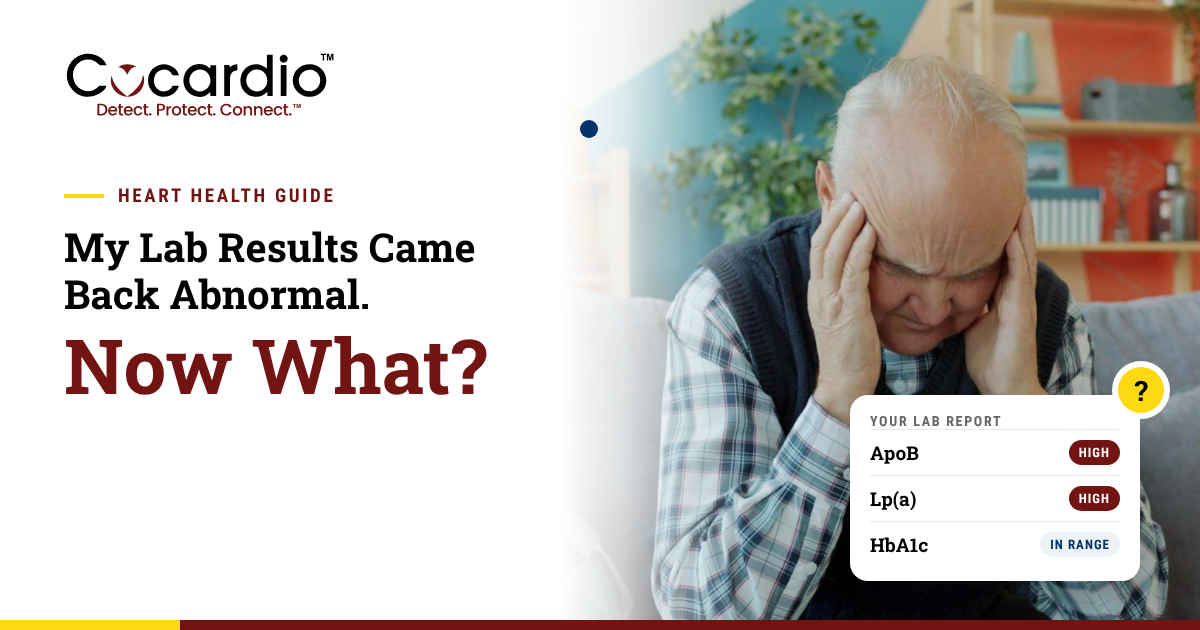
We Talk About Cholesterol as if It Acts Alone
It does not.
Your risk is shaped by cholesterol, yes. But also by blood pressure, blood sugar, smoking, body weight, family history, and lipoprotein(a). All of it goes into one calculation, and that calculation is about you rather than about a population.
This article walks through what the numbers on your panel actually mean. What LDL is. What total cholesterol is. What ApoB and lipoprotein(a) are, and why you may never have heard of them. How family history changes the picture. What it means if plaque has already been found. Where lifestyle fits. And when medication should enter the conversation.
Important: This article is for educational purposes and cannot interpret your results. New, worsening, or persistent chest discomfort, especially discomfort at rest, may need emergency medical attention. Call 911 if you think you may be having a medical emergency.
Quick Answer
Do your cholesterol numbers tell you everything about your heart risk?
No. A standard panel is a good start, and for many people it is enough. But it does not capture everything.
In March 2026, the American College of Cardiology and the American Heart Association, with nine other organizations, released a new dyslipidemia guideline that replaced the 2018 cholesterol guideline.[1] It widened the picture in three ways that matter to you.
It recommends measuring lipoprotein(a) at least once in every adult. It gives apolipoprotein B a defined role. And it expands the use of coronary artery calcium scoring to reclassify risk.[1]
Underneath all of it sits the part no test replaces: nutrition, activity, sleep, stress, and consistency.
What Is Cholesterol, and Why Do We Always Talk About It?
You make it. You need it.
Your liver produces all the cholesterol your body requires. You need it for cell membranes, for vitamin D, for bile acids, and for various hormones. Without it, there would be nothing to discuss.
One useful fact: cholesterol comes only from animals. Plants do not make it. Dietary cholesterol is found in animal products and nowhere else.
The problem is not having cholesterol. The problem is having considerably more than you need.
It is also worth knowing how little the body actually requires. In populations living very differently from modern Western society, and in cord blood from newborns, LDL cholesterol sits far lower than the typical adult level in the United States today.
Watch Now: The Cholesterol Clarity Talk | Dr. Brian H. Asbill, MD | Co Cardio
How Cholesterol Becomes a Problem
Cholesterol does not dissolve in water. So it cannot travel through your blood on its own. It has to be carried inside particles.
That is what LDL, VLDL, IDL, and HDL are. Particles.
This matters more than most people are told, and we will come back to it.
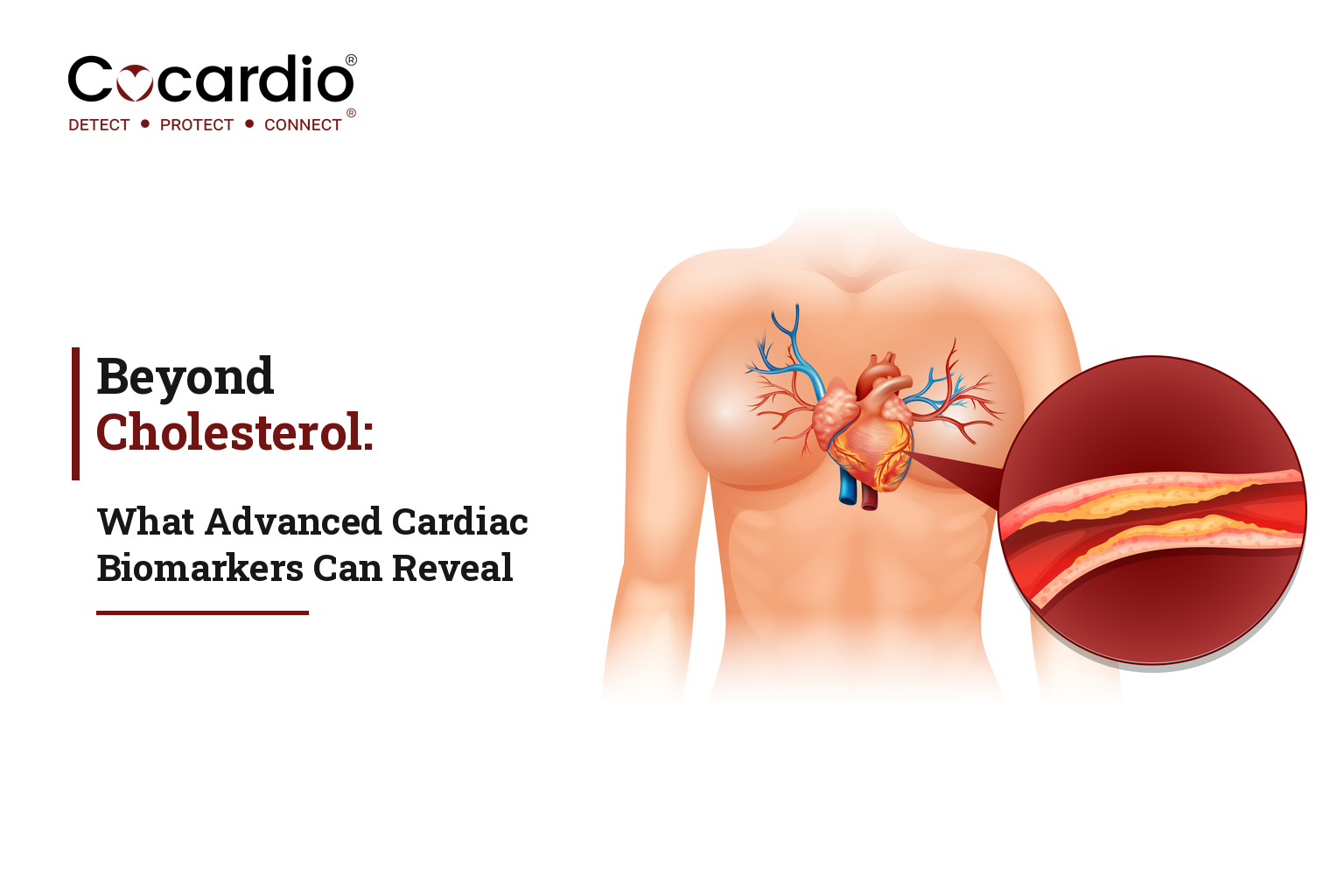
When there is more cholesterol than the body needs, those particles bind to the lining of your blood vessels. They get pulled into the vessel wall, and they release their cholesterol contents there. Over years and decades, that builds up.
From there, it can affect you in two quite different ways.
Slow narrowing. Picture a cross-section of an artery, like a donut. As the buildup grows, the open channel in the middle shrinks. At around 70% blockage, when only about 30% of the normal channel is left, symptoms can begin. That is angina: chest heaviness, tightness, pressure, shortness of breath, sometimes nausea or just feeling unwell. It typically comes on with exertion, or with anything that raises heart rate and blood pressure, and it eases with rest.
Angina is, in an odd way, a fortunate way to present. It is a warning, and no damage has been done yet.
Sudden rupture. This is the more concerning pattern, and it works differently. A smaller buildup, perhaps 30% or 40%, is not enough to limit blood flow, so there are no symptoms at all. But that plaque can crack open. When the cholesterol inside meets circulating blood, a clot forms on top of it, and that clot can grow fast. A blockage that caused no symptoms can become a complete one in minutes.
This is why “my numbers are fine, and I feel fine” is not the same as “there is nothing there.”
The Numbers on Your Panel
Total Cholesterol
The sum of the cholesterol carried in all your particles. Useful, but blunt on its own.
LDL Cholesterol
The number most people know, and the one usually called “bad cholesterol.” It matters, and it is one of the most studied numbers in medicine.
But calling LDL “the bad cholesterol” did people a disservice, because it is not the only particle that causes trouble.
Non-HDL Cholesterol
This one is free. It is already on your panel, or can be worked out from it in one step: total cholesterol minus HDL.
If your total is 220 and your HDL is 70, your non-HDL is 150.
Why bother? Because non-HDL captures LDL, VLDL, and IDL together, all the particles that can lodge in an artery wall. That makes it more predictive than LDL alone.
Apolipoprotein B (ApoB)
Here is the thread that ties it together.
On every one of those particles, VLDL, IDL, and LDL, there sits a single protein called apolipoprotein B. One per particle. ApoB is what allows cholesterol to be deposited in your arterial wall.
So measuring ApoB effectively counts the particles rather than the cholesterol inside them.
Why that matters: for most people, LDL, non-HDL, and ApoB move together. But not always. In people who are overweight, insulin resistant, prediabetic, or living with diabetes, LDL and non-HDL can look acceptable while ApoB remains elevated. When the numbers disagree, risk tracks with ApoB.
The 2026 guideline gives ApoB a defined role, describing it as useful once LDL and non-HDL goals are met, and pointing particularly to people with triglycerides above 200, people with diabetes, and people whose LDL is already below 70.[1]
Lipoprotein(a), or Lp(a)
Lp(a) is like an LDL particle carrying an extra protein on its surface. That extra protein makes it do two things at once: build up in artery walls like LDL, and promote blood clotting.
Remember the rupture pattern above. Clot formation is the mechanism. That is why Lp(a) gets attention out of proportion to how often it is measured.
Lp(a) is set largely by your genes. Diet and exercise move it very little, and there is no well-established medication to lower it at present.
This is where the guidance changed most. The 2026 guideline recommends measuring Lp(a) at least once in every adult’s lifetime, not only in people with a family history.[1] Levels at or above 125 nmol/L, roughly 50 mg/dL, count as a risk-enhancing factor associated with about 1.4 times the risk. At or above 250 nmol/L, roughly 100 mg/dL, the estimated risk at least doubles.[1]
Most people have never had this test. If that includes you, it is worth raising with your doctor.
How Family History Changes the Picture
Family history is not background information. It is a risk factor in its own right, and it feeds directly into risk calculation.
It matters most when heart disease in your family showed up early. A parent or sibling with a cardiac event in their forties or fifties changes the conversation more than a grandparent in their eighties.
Lp(a) is often the reason. Because it is inherited and rarely measured, it can quietly explain heart disease that runs through a family and appears sooner than expected. If early heart disease runs in your family and nobody has ever checked your Lp(a), that is a reasonable question to ask.
Has Plaque Actually Been Detected?
This changes everything about how your numbers are read.
There is a real difference between estimating risk and finding out what is already there.
A coronary artery calcium score is a quick CT scan that measures calcified plaque in the arteries feeding your heart. The 2026 guideline broadened its role, using it to reclassify risk rather than only refine an estimate, and pointing to men aged 40 and older and women aged 45 and older at borderline or intermediate risk as the group where a scan most often changes the decision.[1]
A score of zero means something. Where no calcium is found, treatment can often be safely delayed rather than started. Where plaque shows up, even a little, the conversation shifts toward earlier and more determined prevention.[1]
A CT coronary angiogram goes further, showing the arteries themselves rather than calcium alone.
There is also a naming distinction worth knowing. If you have already had a heart attack, a stroke, a stent, a bypass, or chronic stable angina, your care is called secondary prevention, because blockage is known to be present. Everyone else is in primary prevention, working to avoid a first event. Secondary prevention is treated as the higher-risk situation, and the targets are stricter.
Where Lifestyle Fits
Think of it as a triangle. Medication belongs at the apex. Lifestyle belongs at the base, holding the rest up.
That ordering is not anti-medicine. It is about what the foundation is made of.
Nutrition matters, and saturated fat matters more than dietary cholesterol for most people. One example worth knowing: coconut oil is about 92% saturated fat.
On the other side, soluble fiber is among the most effective dietary tools for lowering cholesterol, and soluble fiber comes only from plants. Before reaching for a supplement, it is reasonable to simply eat more plants.
That last point now has guideline backing. The 2026 guideline explicitly does not recommend dietary supplements for lowering lipids, on the grounds that the benefit is not established.[2]
Beyond nutrition: move more, manage stress, stay connected to other people, sleep better. None of this is exotic. All of it is the part that keeps working between appointments.
When Medications Enter the Conversation
Cholesterol-lowering medication reduces risk. That is well established across decades of trials, and nothing here suggests otherwise.
Two things are worth understanding about it.
First, it is not a panacea. Taking a pill does not mean the problem is handled and the lifestyle part no longer applies. Both matter.
Second, learn the difference between relative and absolute risk. When you hear that a medication lowers risk by a given percentage, that is usually the relative reduction. The absolute reduction, the change in your own chance of an event, is generally a smaller number. Neither figure is dishonest. They answer different questions, and knowing which one you are being shown makes you a better participant in the decision.
The 2026 guideline restored specific LDL goals set by risk level: under 100 for borderline or intermediate risk, under 70 for high risk, and under 55 for very high risk in secondary prevention.[1] What applies to you is a decision for you and your prescriber, not something to work out from an article.
To be direct: CoCardio® never advises anyone to start, stop, reduce, or change prescribed medication. If you would rather be on less, that is a conversation with the clinician who prescribes it.
How CoCardio® Approaches This
At CoCardio®, we do not begin with a treatment. We begin by understanding you.
Every care journey starts with a consultation. Our team reviews your health history, your current medical care, your prior testing, your family history, and your goals. The consultation is not an unnecessary step. It is how we understand the person behind the numbers and decide the most appropriate next step.
Many people come to us holding a result they do not fully understand. A calcium score. A borderline reading. A number a relative told them to worry about. Part of our job is to explain what these measures look at, in plain language, so you can take a more informed part in your own care.
From there, depending on your situation, your findings may inform a Healthy Heart Blueprint™. It is a personalized roadmap designed to help you better understand your cardiovascular wellness goals, current health considerations, and possible next steps.
We want to be clear about the boundary. Diagnosis and clinical interpretation belong with qualified medical professionals. Our role is professional education and support, alongside the care you already receive.
Cost and Payment
CoCardio® is a cash-pay practice. We do not bill insurance for consultations, ECP sessions, or preventive cardiovascular wellness services. Eligible HSA and FSA payments may be accepted. Please confirm eligibility with your plan administrator. Coverage for laboratory testing and imaging ordered elsewhere is determined by your own plan.
Frequently Asked Questions
Is LDL the only cholesterol number that matters?
No. LDL matters, but VLDL and IDL particles also contribute. Non-HDL cholesterol captures all of them in one number, and ApoB counts the particles directly. For most people, these move together. When they do not, risk tracks with ApoB.
Should I have my Lp(a) measured?
Yes, at least once. The 2026 guideline recommends measuring lipoprotein(a) at least once in every adult’s lifetime. Most people have never had it done.
Can I lower my Lp(a) with diet and exercise?
No, not meaningfully. Lp(a) is largely genetic, and there is no well-established medication to lower it at present. Knowing your level still matters, because it changes how aggressively other risk factors are managed.
My LDL is fine. Am I in the clear?
It depends. An acceptable LDL with a high ApoB is a real pattern, particularly in people who are insulin resistant or living with diabetes. It is worth asking your doctor whether ApoB or non-HDL adds anything in your case.
Do supplements lower cholesterol?
No, not according to the 2026 guideline, which explicitly does not recommend dietary supplements for lipid lowering. Soluble fiber from food is a different matter, and it comes only from plants.
Should I stop my cholesterol medication and try lifestyle first?
No. CoCardio® never advises anyone to stop, reduce, or change prescribed medication. That decision belongs with your prescriber, and it is a reasonable conversation to have with them.
Can I use HSA or FSA funds at CoCardio®?
Yes, eligible HSA and FSA payments may be accepted. CoCardio® is a cash-pay practice and does not bill insurance for consultations, ECP sessions, or preventive cardiovascular wellness services. Please confirm eligibility with your plan administrator.
Better Questions Beat More Numbers
It is easy to become addicted to the numbers. You manage what you measure, so we measure numbers, and then we manage numbers.
But it was never only about the numbers. The point of knowing your LDL, your non-HDL, your ApoB, and your Lp(a) is to understand your situation well enough to make good decisions with the professionals involved in your care.
If you are holding a result you do not fully understand, that is a reasonable place to start a conversation.
Your first step is a consultation so we can understand your health history, goals, current care, and whether CoCardio® services may be appropriate as part of your personalized cardiovascular wellness plan.
For your privacy, please do not share personal health information in public comments or unsecured messages. To discuss your situation, please contact our office directly through appropriate channels.
References
- 2026 ACC/AHA/AACVPR/ABC/ACPM/ADA/AGS/APhA/ASPC/NLA/PCNA Guideline on the Management of Dyslipidemia. American College of Cardiology / American Heart Association, released March 13, 2026. Replaces the 2018 AHA/ACC Guideline on the Management of Blood Cholesterol.
- 2026 ACC/AHA Multisociety Dyslipidemia Guideline, summary of key changes, including the recommendation against dietary supplements for lipid lowering.
This article is provided for general educational purposes and does not constitute medical advice, diagnosis, or treatment. Individual circumstances vary, and decisions regarding cardiovascular care should be made with appropriate healthcare professionals.
CoCardio® services are designed to complement, not replace, emergency care, a cardiologist, primary care physician, cardiac rehabilitation program, prescribed medication, diagnostic testing, or medically recommended procedures.
If you have new, severe, or worsening symptoms, seek appropriate medical attention rather than relying on information provided in this article.