Many people assume heart testing is only important later in life. However, cardiovascular concerns can develop quietly, sometimes before noticeable symptoms appear.
Your heart health is influenced by many factors, including genetics, blood pressure, cholesterol levels, lifestyle habits, existing health conditions, and family history. Understanding your cardiovascular health earlier can help you make more informed decisions about prevention and long-term wellness.
An echocardiogram, also called an “echo,” is one noninvasive tool that can provide information about your heart’s structure and function.
However, heart testing is not a one-size-fits-all decision. A heart evaluation should be based on your individual symptoms, health history, risk factors, and goals.
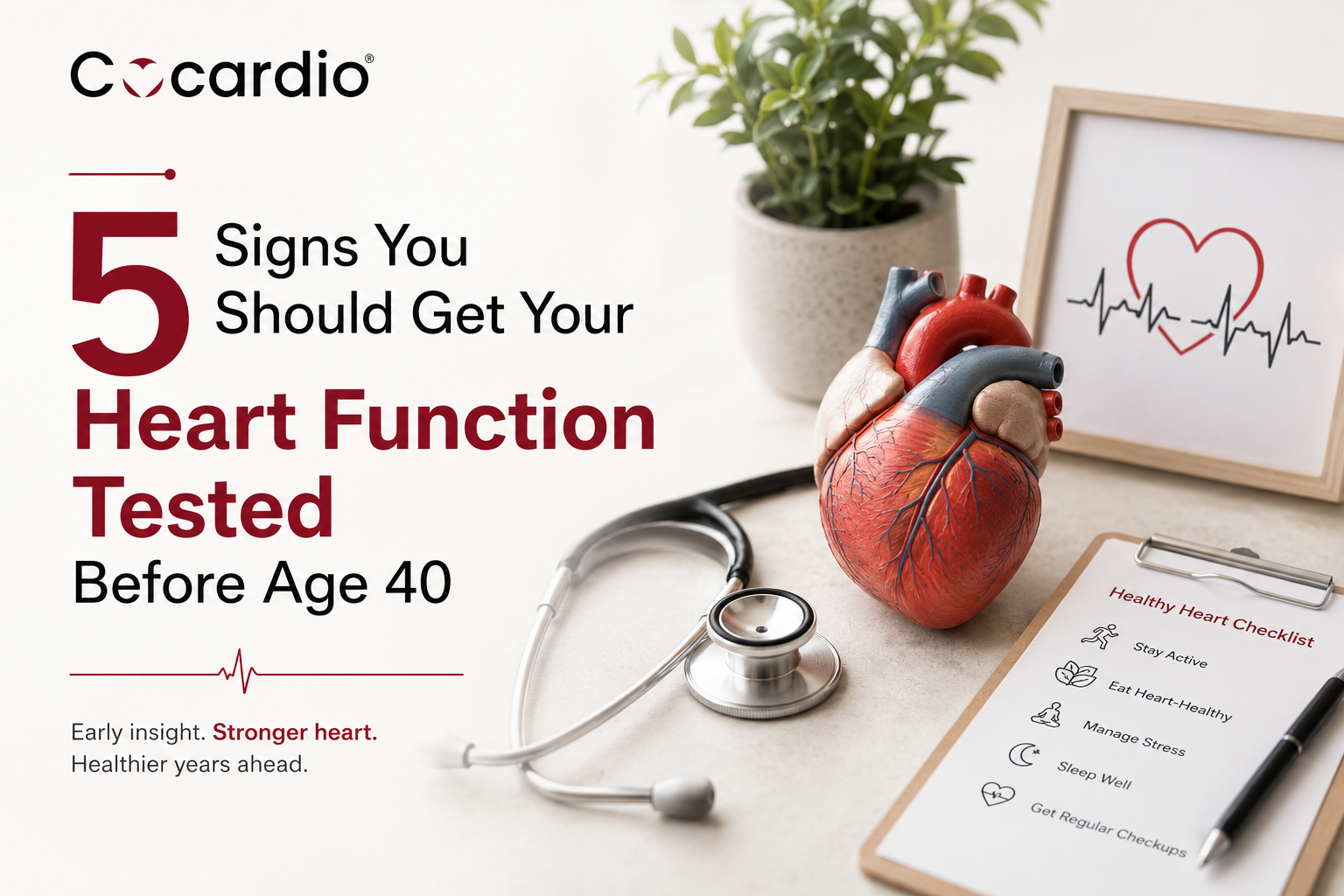
This article explains possible signs of heart disease under 40, when heart screening before age 50 may be appropriate, what an echocardiogram can show, and how a personalized cardiovascular evaluation may support proactive heart health.
Important: New, severe, or worsening chest pain may be a medical emergency. Call 911 or seek immediate medical care rather than using this article to evaluate urgent symptoms.
Watch: Understanding the Modifiable Risk Factors Behind Heart Attacks with Pratiksha Gandhi, MD
Should You Get Your Heart Function Tested Before Age 40 or 50?
The short answer: it depends on your individual health situation.
A heart evaluation may be considered when there are factors such as:
- Unexplained symptoms
- High blood pressure
- Diabetes or metabolic risk factors
- Abnormal ECG findings
- A heart murmur
- Concerns related to athletic activity
- Significant family history of heart disease
The goal of screening is not to create unnecessary testing. It is to understand your cardiovascular health and determine which evaluations may be appropriate for you.
What Is an Echocardiogram?
An echocardiogram is an ultrasound test that uses sound waves to create moving images of the heart.
It is noninvasive, painless, and does not use radiation.
An echocardiogram can evaluate:
- Heart size and structure
- Heart muscle movement
- Pumping strength
- Heart valve function
- How the heart chambers are working
An echo provides valuable information about how the heart is functioning, but it is only one part of a complete cardiovascular assessment.
Five Reasons to Consider an Echocardiogram Before Age 40
An echocardiogram may be considered in certain situations to better understand heart structure and function.
Detects silent heart-muscle problems. An echo measures heart size, wall motion, and pumping strength. It can help identify conditions such as cardiomyopathy or reduced heart function before symptoms become severe.
Identify valve disease early. An echocardiogram can detect problems with heart valves, including leaking, narrowing, or abnormal valve structure. Some valve conditions may produce few or no symptoms initially but may require monitoring over time.
Assess damage from high blood pressure. Long-term hypertension can place additional stress on the heart.
An echo may help identify changes associated with high blood pressure, including:
- Thickened heart muscle
- Enlarged chambers
- Changes in heart relaxation
Investigate warning signs or abnormal findings. An echo is particularly valuable for unexplained breathlessness, fatigue, chest discomfort, swelling, fainting, palpitations, an abnormal ECG or a heart murmur.
Screen people with an important family history. People with a strong family history of certain inherited heart conditions may benefit from discussing screening options with their healthcare professional.
When an Echocardiogram Is, and Is Not, Recommended
A routine echocardiogram is not recommended for every healthy, symptom-free person solely because they are approaching 40. It is most appropriate when symptoms, hypertension, diabetes, a murmur, ECG abnormalities, athletic concerns or significant family history are present. Appropriate-use criteria are designed to reduce unnecessary echocardiograms. However at Cocardio, we use Echocardiogram as a screening tool before starting our ECP Sessions.
What an Echocardiogram Does Not Show
An echocardiogram evaluates heart structure, valves, and function. However, it does not directly rule out blocked coronary arteries.
Depending on your cardiovascular risk factors, other assessments may include:
- Advanced Lipid Panel
- Coronary artery calcium scoring
- Coronary CT angiography with CLEERLY or HeartFlow
- Stress testing
A complete cardiovascular evaluation considers multiple factors rather than relying on a single test.
Why a Personalized Heart Evaluation Matters
Two people may have the same goal of understanding their heart health but require different approaches.
One person may have no concerning symptoms and benefit from reviewing risk factors, lifestyle habits, and appropriate screening options.
Another person may mention new symptoms, family history concerns, or previous abnormal findings that require additional medical guidance before deciding on next steps.
This is why cardiovascular evaluation begins with understanding the person, not simply ordering a test.
How CoCardio® Approaches Preventive Heart Health
CoCardio® is a preventive cardiovascular wellness practice in Encinitas, California, serving individuals who want to take a more proactive role in understanding their heart health.
Our approach begins with a consultation to understand:
- Health history
- Current concerns
- Lifestyle factors
- Existing medical care
- Personal wellness goals
From there, we develop a personalized Healthy Heart Blueprint™ that helps identify areas of focus and appropriate next steps.
The purpose is not to recommend the same test or service for everyone. It is to understand the individual and determine what may best support their cardiovascular wellness goals.
CoCardio® services are designed to complement, not replace, care from your physicians and healthcare team.
What Is the Healthy Heart Blueprint™?
The Healthy Heart Blueprint™ is a personalized approach created from your Root Cause consultation.
It helps clarify:
- Your cardiovascular wellness goals
- Areas that may require attention
- Potential evaluation options
- Lifestyle factors that may support your goals
- How CoCardio® services may fit alongside your existing care
A heart evaluation is not only about finding problems. It is also about helping individuals become more informed and engaged in their health decisions.
Why Patients Choose CoCardio®
CoCardio provides a preventive-forward cardiovascular wellness experience for people who value personalized attention and education.
Individuals who choose CoCardio® often want to:
- Take a proactive approach to cardiovascular wellness
- Better understand their health risks
- Receive personalized guidance
- Complement their existing medical care
- Participate in meaningful long-term health improvements
CoCardio® is not a replacement for cardiology care, emergency care, diagnostic testing, prescribed medication, or medically recommended procedures
Cost, Insurance, HSA and FSA Information
CoCardio® is a cash-pay practice. We do not bill insurance for consultations, evaluations, or preventive cardiovascular wellness services.
Eligible HSA and FSA payments are accepted. Patients should confirm eligibility and requirements with their individual HSA or FSA administrator.
Pricing varies depending on the consultation, evaluation, and services appropriate for each individual.
Explore a More Proactive Approach to Cardiovascular Wellness
Understanding your heart health begins with understanding your individual story.
CoCardio® offers personalized cardiovascular consultations and Healthy Heart Blueprint™ planning in Encinitas for individuals who want a thoughtful, preventive-forward approach.
Your first step is a consultation where we can review your health history, concerns, goals, and possible next steps.
Frequently Asked Questions
What is an echocardiogram?
An echocardiogram is an ultrasound of your heart. It uses sound waves to show your heart’s size, pumping strength, wall motion, and valve function. It is noninvasive, painless, and does not use radiation.
Does an echocardiogram hurt?
No. It is a noninvasive ultrasound. A technician moves a small probe across your chest, and there are no needles, incisions, or radiation.
Should everyone get an echocardiogram before 40?
A routine echo is not recommended for every healthy, symptom-free person. It is most appropriate when there are symptoms, high blood pressure, diabetes, a heart murmur, an abnormal ECG, athletic concerns, or a significant family history.
Does an echocardiogram check for blocked arteries?
An echo looks at the heart’s structure, valves, and function. It does not directly rule out coronary artery blockages, which may require cholesterol testing, coronary calcium scoring, coronary CT angiography, or stress testing.
Where can I get an echocardiogram in San Diego?
CoCardio® offers preventive cardiovascular consultations in Encinitas, serving San Diego County and California. Schedule a consultation to discuss which evaluation may be appropriate for you. You can always ask your healthcare provider to do echoes, however it is a lengthy process that takes 2-3 months and depends on insurance coverage.
Does CoCardio® accept insurance?
CoCardio® is a cash-pay practice and does not bill insurance for consultations, evaluations, ECP/EECP® sessions, or preventive wellness services. Eligible HSA and FSA payments are accepted.
Medical Disclaimer
This article is provided for general educational purposes and does not constitute medical advice, diagnosis, or treatment.
Heart evaluations and testing are not appropriate for everyone and should be determined through an individualized discussion with qualified healthcare professionals.
CoCardio® services do not replace emergency care, a cardiologist, primary care physician, prescribed medication, diagnostic testing, cardiac rehabilitation, or medically recommended procedures.
Call 911 or seek immediate medical attention for new, severe, or worsening chest pain, severe shortness of breath, fainting, sudden weakness, or other symptoms that may indicate a medical emergency.
EECP® is a registered trademark of Vasomedical Inc., NY.